
or use the SITEMAP
Warm or Cool?
How to Identify Your Undertone
This is a simple first step in Color Analysis - and a helpful way to discover which colors naturally suit you best
One of the easiest ways to understand which colors flatter you is to identify whether your coloring is Warm or Cool.
Knowing your undertone is a very helpful shortcut in Color Analysis because it explains why some shades brighten your face while others leave you looking tired, dull or washed out.
It’s not the whole story, but it’s an excellent place to begin.
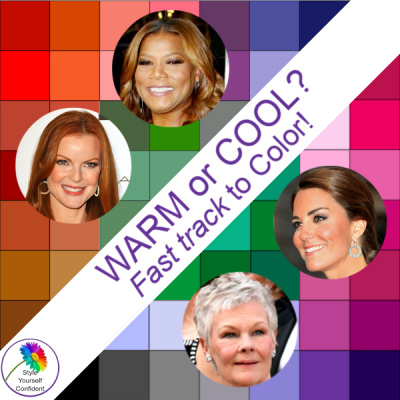
What Does Warm or Cool Mean?
Your undertone is the subtle color influence beneath the surface of your skin. It stays the same whether you are pale in winter or tanned in summer.
This is different from your complexion, which is the surface color of your skin and may be fair, medium, olive or dark.
In simple terms:
- Warm undertones have golden, peachy, yellow or olive influences
- Cool undertones have pink, rosy, blue or ash influences
Once you begin to recognise this, it becomes much easier to understand why some colors bring your face to life while others do very little for you.
Why Knowing Your Undertone Helps
When you wear colors that echo your natural coloring, your skin tends to look fresher, clearer and more radiant. Your eyes may look brighter and your whole appearance more harmonious.
When colors work against your undertone, they can make shadows, redness or tiredness more noticeable.
That is why identifying whether you are Warm or Cool can be such a useful first step. It gives you a clearer idea of which clothing, accessories and makeup shades are likely to flatter you most.
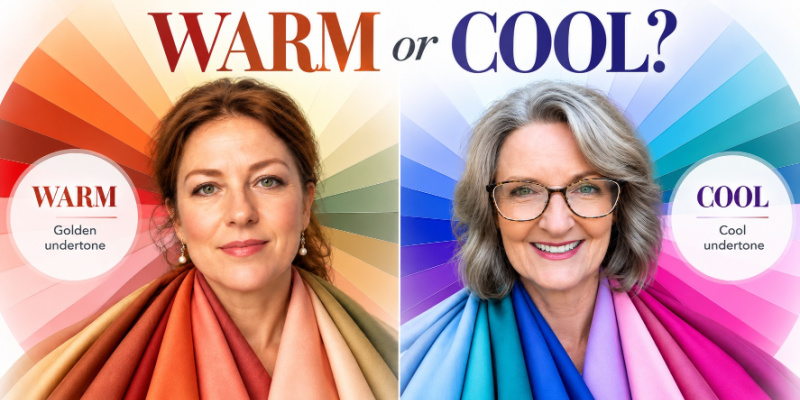
Prue is WARM, read Prue's Color Story; Dana is COOL, read Dana's Color Story
It's Not About The Color - It's About The Shade
This is such an important point.
Color Analysis is not usually deciding whether you can wear red, blue, green, yellow, purple, grey or any other color. It's much more about choosing the right shade of that color for you.
Most palettes include practically every color, but the tones and shades are adjusted to suit the individual. One woman may glow in a warm tomato red, while another is far more flattered by a cool raspberry red. One may suit a golden olive green, while another comes to life in a blue-green teal.
That is why Color Analysis feels so personal. It is not about ruling colors in or out, but about finding the versions that bring your natural coloring into harmony.
Undertone is Not The Same as Complexion
This is where many women get confused.
- You can have fair skin and still be Warm
- You can have deeper skin and still be Cool
- Some women have a neutral undertone, which means Warm versus Cool is not the strongest feature in their coloring
So it's always best to look for a collection of clues rather than rely on any one test.
Look For Clues, Not Rules
There is no single test that works perfectly for everyone, but these clues can be very helpful.
You may be WARM if..
• your coloring has a golden, peachy, beige, or olive cast
• you have or had freckles
• your hair has warm golden, red or auburn tones
• your eyes contain gold, olive, teal or warm green
• cream flatters you more than pure white
• gold jewellery and earthy colors feel natural on you
You may be COOL if..
• your coloring has a pink, rosy or blue-based cast
• your hair is ash blonde, ash brown, cool dark brown or silver
• your eyes appear smoky, greyed, blue or cool green
• pure white or soft white suits you better than cream
• silver, pearls, berry shades, blues and jewel tones suit you well
You don't need to match every point exactly. Most women simply find they lean more one way than the other.
Free Guide - Warm or Cool Colors
If you’d like an easy reference for shopping, download my simple guide to help you identify the difference between Warm and Cool color shades in clothes and makeup.

Can You Be Neutral?
Yes, absolutely.
Some women do not fit neatly into either warm or cool. If your undertone is more neutral, you may find that both can work, provided the shades are not too strong or extreme.
This is one reason why full Color Analysis can be so helpful - it goes beyond Warm or Cool alone and looks at the overall harmony of your natural coloring.
Nature Usually Gives Us a Clue
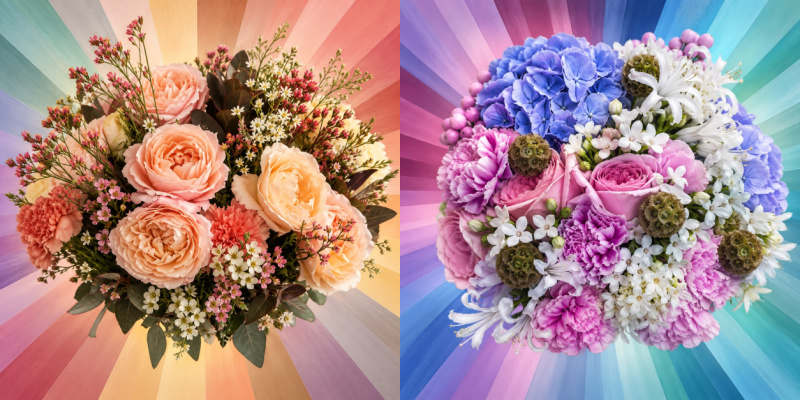
Very often, women are instinctively drawn to colors that belong to their own Color Family. Think of flowers in a bouquet - when the colors belong together, the whole arrangement looks balanced and pleasing.
Your natural taste will often echo the your own coloring, which is why Color Analysis can feel so intuitive. When your clothes and makeup reflect the natural qualities in you, the effect is harmonious and flattering.
I buy pink flowers for my daughter but peach or golden flowers for my daughter-in-law. I know what they like and the choices echo the difference in their natural coloring.
Warm And Cool is Only The Beginning
Warm or cool is a very useful guide, but it is not the whole of Color Analysis.
You may also suit lighter or deeper colors, softer shades or clearer tones. That is why a full personal color assessment can be so valuable - it takes in the complete picture.
Still, understanding your undertone is one of the easiest and most practical first steps you can take.
It Matters Especially With Makeup
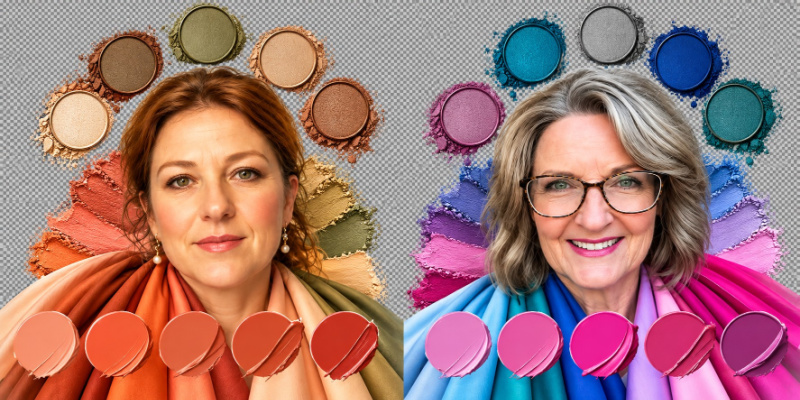
Many women notice undertone most clearly when choosing makeup. I had fun doing the above image - it shows very clearly the difference between tones!
The wrong foundation, lipstick, blush or eyeshadow can sit awkwardly on the skin and make you look tired or unnatural. The right undertone, on the other hand, can make your face look fresher, softer and more balanced.
If makeup shopping has ever felt confusing, Warm or Cool is a very good place to begin.
A Simple Next Step
If you would like a quick introduction to your likely Color Family, try the Free Color Analysis Quiz.
If you would prefer a more personal and in-depth result, Online Color Analysis allows me to assess your coloring for you from the comfort and privacy of your own home.
Both are designed to help you move forward with more clarity and confidence.
Where Next?
If you’d like to explore your colors further, here are a few helpful next steps:
Take the Free Color Analysis Quiz
A quick and enjoyable way to discover your likely Color Family.
Read What Is Color Analysis?
A clear introduction to how personal color works and why it makes such a difference.
Discover The Benefits of Color Analysis
Find out how knowing your best colors can simplify your wardrobe and boost confidence.
Browse the Color Analysis FAQ
Answers to the questions many women ask before getting started.
Choose Online Color Analysis
If you would like a personal, in-depth assessment, this can all be done from the comfort and privacy of your own home.
You might like these
Color analysis Light
Color Analysis Light - your natural coloring is predominantly Light and you can wear and enjoy the lightest colors from Spring and Summer
Color analysis Warm
Color Analysis Warm! a natural golden coloring is enhanced by colors with a yellow undertone, you can wear and enjoy many colors from both Spring and Autumn
Color analysis Cool
Color Analysis Cool, your natural 'English rose' pink complexion will be enhanced by all colors with a blue undertone and you can happily wear and enjoy many of the colors from Summer and Winter


Homepage >> Find your Best Colors >> Warm or Cool
Hi I'm Pamela - come join me!

The latest on THE BLOG!


-
Dress for Weight Gain by Body Type \| Style Confidence
Oct 06, 26 08:04 AM
 See where weight settles by body type and weight gain, plus figure positives and styling tips to help you dress more confidently for your shape.
 -
Benefits of Color Analysis
Oct 05, 26 11:04 AM
Benefits of Color Analysis go much farther than mere color! Looking and feeling good raises confidence and self esteem, improves body image and mental well being


Like to join the Style Yourself Confident Group Board on Pinterest? Just Contact me to be added ...
By Pamela Graham Copyright 2012-2026 Style-Yourself-Confident.com
Powered by Solo Build It